
WILL THE ANCIENT CASTLE OF CRAC DES CHEVALIERS STILL SURVIVE?

The limestone walls of the Crac des Chevaliers makes it take on a look of stuffs from Disney-
worthy dreams.
One can only imagine all the historical
events this castle has witnessed
from that hilltop since the Crusaders started constructing it in the year 1142 as their
latest and greatest fortress.
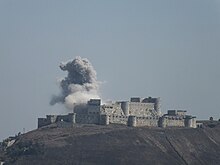
This world heritage is now under treat of destruction from the world-shaking crises—the Syrian
Civil War.
The UNESCO World
Heritage Site has suffered what may be termed as an irreparable damage.
Civil War.
The UNESCO World
Heritage Site has suffered what may be termed as an irreparable damage.
As of the result of the civil war over 450,000 Syrians have lost their lives while 4.81 million have
been forced to flee their homes and join the massive refugee crisis currently sweeping the globe.
been forced to flee their homes and join the massive refugee crisis currently sweeping the globe.
The violence has not exempted the country’s cultural heritage and historical sites
as the Syrian Army and rebel forces
continue to fight for control over
some of the most famous and important landmarks.
As if that burden was not enough
ISIS, which has become notorious for looting historical artifacts and either destroying them in a show of power or selling them on the black market to fund their brutal ongoing campaign.

as the Syrian Army and rebel forces
continue to fight for control over
some of the most famous and important landmarks.
As if that burden was not enough
ISIS, which has become notorious for looting historical artifacts and either destroying them in a show of power or selling them on the black market to fund their brutal ongoing campaign.
There is a very close link between
attacks on people and landmarks or traditional sites “The
intentional obliteration of any trace
of cultural heritage—be it tangible or
intangible—is part of a strategy of
war.”
attacks on people and landmarks or traditional sites “The
intentional obliteration of any trace
of cultural heritage—be it tangible or
intangible—is part of a strategy of
war.”
Earlier on In the 12th century, warriors were sweeping through
what is now known as the Middle
East.
The Crusaders stormed the region Starting in 1095, on the orders of
Pope Urban II to take full control of what the Catholics refer to as their holy lands.
what is now known as the Middle
East.
The Crusaders stormed the region Starting in 1095, on the orders of
Pope Urban II to take full control of what the Catholics refer to as their holy lands.
To sink their roots and secure their domination of the
area, they started building castles up and down
the coast, choosing strategic positions where they could defend their new strongholds from the constant attacks of the local Islamic armies.

area, they started building castles up and down
the coast, choosing strategic positions where they could defend their new strongholds from the constant attacks of the local Islamic armies.
The Crusaders began constructing the Crac des Chevaliers fortress
in 1142, by then the Second Crusade was
already under heavy bombardment
From the Muslim armies who where becoming
increasingly unified against one common enemy "the invaders." But that didn't stop the
Catholic forces from building an
impressive new citadel of power on what is
known as the Homs Gap.
"The Homs Gap is one area
where a break in the coastal
mountain range allowed for a
pathway between the interior of the country and the Mediterranean Sea."
According to famed author T.E. Lawrence, "the Crac des
Chevaliers is perhaps the best
preserved and most wholly
admirable castle in the world.”
in 1142, by then the Second Crusade was
already under heavy bombardment
From the Muslim armies who where becoming
increasingly unified against one common enemy "the invaders." But that didn't stop the
Catholic forces from building an
impressive new citadel of power on what is
known as the Homs Gap.
"The Homs Gap is one area
where a break in the coastal
mountain range allowed for a
pathway between the interior of the country and the Mediterranean Sea."
According to famed author T.E. Lawrence, "the Crac des
Chevaliers is perhaps the best
preserved and most wholly
admirable castle in the world.”
This was just one in a series of five different castles, but it was the best of them all.
They were built to secure the
area and where able to remain in constant
communication via signal fires and
other ancient modes of
communication.
The castle featured 13 towers, two
concentric series of ramparts for
added defense, ditches, courtyards,
chapels, and more. it could house up to 2,000 men within it's walls.
By the year in 1188, the Crusaders had lost many of their holy sites and castles but they still
maintained a tight grip on the Crac
des Chevaliers. For a total of 129
years, even with all the attempt at attack the castle was able to repel them all Sitting nearly half a mile
above the valley, they were able to keep an eye on potential aggressors.
They were built to secure the
area and where able to remain in constant
communication via signal fires and
other ancient modes of
communication.
The castle featured 13 towers, two
concentric series of ramparts for
added defense, ditches, courtyards,
chapels, and more. it could house up to 2,000 men within it's walls.
By the year in 1188, the Crusaders had lost many of their holy sites and castles but they still
maintained a tight grip on the Crac
des Chevaliers. For a total of 129
years, even with all the attempt at attack the castle was able to repel them all Sitting nearly half a mile
above the valley, they were able to keep an eye on potential aggressors.
But just shy of a century later, The Mamluks, a group of
former slave soldiers from the
Muslim Army who had won their
independence, decided to launch a
siege against the grand castle.
former slave soldiers from the
Muslim Army who had won their
independence, decided to launch a
siege against the grand castle.
But the castle was such an
impenetrable fortress that only the use of trickery could enable them to defeat the Crusaders once and for all.
impenetrable fortress that only the use of trickery could enable them to defeat the Crusaders once and for all.
Their proverbial Trojan Horse was their way in and On April 8, 1271, the Crusaders waved their white flag of resignation surrendered and abandoned the Crac
des Chevaliers once and for all.
The Mamluks took up
residence and continued to make
improvements on the stronghold, but
eventually after centuries of wars, the wars in the region
died down and the castle fell into
disuse.
The French government later
came on the scene in the 20th century, taking possession and restoring it to its once former glory. It was eventually
turned back over to the Syrian
government, once the restoration was completed, and the castle reopened as a very popular and historic tourist
attraction.

One traveller when asked about the castle had this to say,
“The Crac, set amid green rolling hills, may be
the paragon of castles, the one in the mind of any child who sets out with a bucket and a pail.”
des Chevaliers once and for all.
The Mamluks took up
residence and continued to make
improvements on the stronghold, but
eventually after centuries of wars, the wars in the region
died down and the castle fell into
disuse.
The French government later
came on the scene in the 20th century, taking possession and restoring it to its once former glory. It was eventually
turned back over to the Syrian
government, once the restoration was completed, and the castle reopened as a very popular and historic tourist
attraction.
One traveller when asked about the castle had this to say,
“The Crac, set amid green rolling hills, may be
the paragon of castles, the one in the mind of any child who sets out with a bucket and a pail.”
But no improvements prepared it for modern warfare.
On March 5th, 2011, war broke out in Syria, and in 2012, a rebel group in the Homs region took up residence in the castle.
The Crac des Chevaliers is not only a desirable historic icon, it is also a
strategic military post, one that holds
an enviable position as well as
impressive fortifications. So,
naturally, the Syrian government
wanted it taken back from the rebels.
It took over two years for the Syrian Army to take back possession of the site after a very ferocious attack
against the rebels in March of 2014.
strategic military post, one that holds
an enviable position as well as
impressive fortifications. So,
naturally, the Syrian government
wanted it taken back from the rebels.
It took over two years for the Syrian Army to take back possession of the site after a very ferocious attack
against the rebels in March of 2014.
The extent of the damage is still yet to be ascertained it is known
that "it was subject to three rounds of bombings from the Syrian Air Force, as well as a variety of ground
attacks."
The castle is still
at risk of further damage as long as the war continues.

that "it was subject to three rounds of bombings from the Syrian Air Force, as well as a variety of ground
attacks."
The castle is still
at risk of further damage as long as the war continues.
Damages to a cultural artifact like
the Crac des Chevaliers, and the almost total destruction of the ancient city of
Palmyra have moved other
countries to take steps toward
protecting and securing some of these cultural
artifacts under threat.
the Crac des Chevaliers, and the almost total destruction of the ancient city of
Palmyra have moved other
countries to take steps toward
protecting and securing some of these cultural
artifacts under threat.
About a $100 million where raised at a summit in Abu Dhabi in
December, by a coalition of about 40 governments and cultural
institutions in order to remove at-risk treasures
from conflict-torn areas and secure
them at museums in the north of
France.
The funny thing about it is that many refugees are increasingly
being turned away from these same countries.
December, by a coalition of about 40 governments and cultural
institutions in order to remove at-risk treasures
from conflict-torn areas and secure
them at museums in the north of
France.
The funny thing about it is that many refugees are increasingly
being turned away from these same countries.
The highest level of
destruction ever witnessed since World War II, but still the Crac des Chevaliers, will keep standing high on hill where it has stood for
centuries atop the
Homs Gap, bearing witness for centuries to come and
trying to survive.

destruction ever witnessed since World War II, but still the Crac des Chevaliers, will keep standing high on hill where it has stood for
centuries atop the
Homs Gap, bearing witness for centuries to come and
trying to survive.


No comments: